In the past few jobs I’ve held, I’ve managed to get to the point people would say, “I know I can come to you with a problem and you’ll get something done.”
It makes me incredibly proud when people see me as the “Get shit done” person.
When I was in the schools, it was when a student was in need of a special education referral. It happens with different things now that I work for the state.
It’s happened in other areas of my life as well.
Like in college when my friends would ask me how I stay motivated to work out, or how I even knew what kind of workouts to do in the first place.
Or how I managed to balance all my routines when I was working full-time in the schools, finishing my dissertation, on a racing team, and also was a new stepmom.
I was able to get to a point, when I was a school SLP, that I could walk into language therapy sessions confident.
When I could speak up in a tense IEP meeting or school problem-solving meeting and people would listen to my recommendations.
When my administrators would trust me and value my opinion, and let me have flexibility to experiment with different service delivery models without questioning what I was doing.
And at the same time, I had the rest of my life together too. I was training regularly and had a social life. I was happy with my relationships. I worked hard, but wasn’t burnt out.
I wasn’t able to do all of that by being smart. I was able to get there by building good habits.
Habits lead to skills and knowledge. Skills and knowledge lead to competence and eventually expertise. That’s where the magic happens. But actually it’s not magic at all. It’s learning.
In order to coordinate all of that, I had to have clinical skills. I had to have self-control. I had to be able to read the room and interact with humans. I had to adjust my plan repeatedly, and evaluate risk. I needed writing skills. Athletic ability. The list goes on and on.
But the one skill that made all the rest possible was being able to struggle through the painful learning curve of whatever new habit I was building.
To stick with the habit long enough that it felt solid and I could move on to the next one and go through the process again.
I didn’t add all the habits at once. For example, when I started writing my dissertation, I already had my language therapy protocol down.
I already had my running schedule solidified. So the new habit I was “stacking” was regular writing and research. Thankfully I had past experience to pull from at that point.
Here is the key: Don’t go nuclear and blow up your whole system (and life) at once. Instead, pick one habit at a time.
When I give therapists frameworks for language or executive functioning, I encourage them to use a technique I call “asset stacking” along with my “master plan” protocol.
The master plan helps you block out protected time to build new skills, tools, or habits. The “asset stacking” concept helps you figure out how you use that time.
It’s normal to struggle when you’re learning new therapy techniques. Or considering new service delivery models. This is just a learning curve, not a roadblock.
I leverage both of the Master Plan and Asset Stacking strategies in Language Therapy Advance Foundations, my program that gives SLPs a framework for language therapy…
As well as the School of Clinical Leadership, which gives related service providers a framework for executive functioning intervention.
And here’s the beautiful thing:
It’s okay to fall off the wagon once you learn something new. In fact, getting off track is part of the process.
I got off track in 2024, for example. I’d started a new job, continued to run my business, and had to learn a lot of new skills all at once.
I was working all the time, neglecting nutrition, sleep, and relationships, putting on weight and not feeling like myself.
But since I’ve used the Master Plan and the “stacking” concept before, I was able to use them again to get back on track.
This is a picture of me and my husband after a 5K after we both committed to focusing on nutrition, regular training, and also getting out and being social instead of hibernating in our house like we’re often tempted to do.
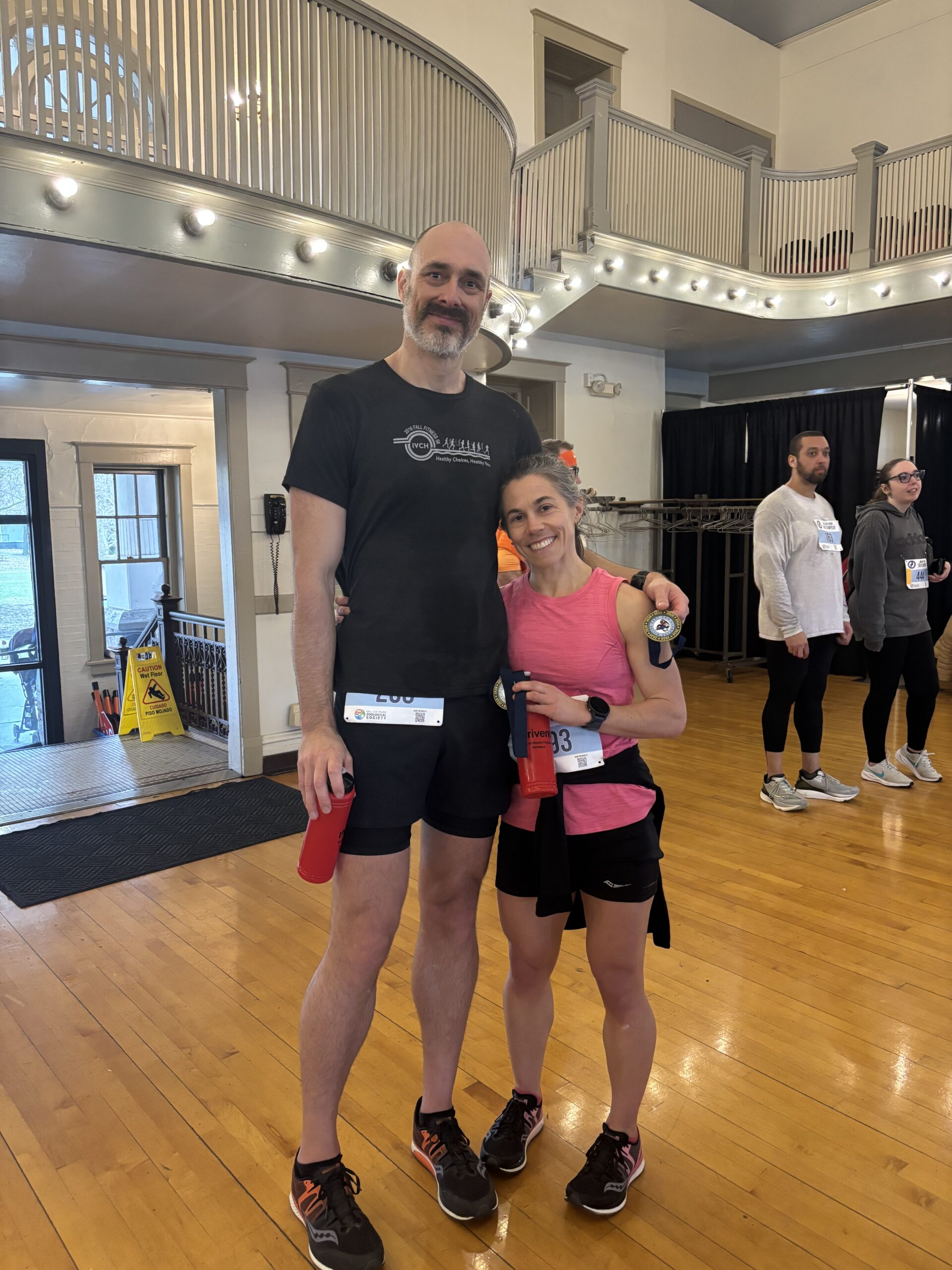
Side note: We once won an award in our local running club for “the shortest person in the club married to the tallest person in the club.”
I promise, feeling like you have your shit together at least 80-90% or the time is possible with the right habits in place.
I’d love to share one of my tools with you that’s helped me make it happen, and most importantly, that’s helped me get back on track when I wavered-whether it be designing a therapy protocol, and workout plan, or social outing.
Language Therapy Advance Foundations gives SLPs a framework for language therapy using what I refer to as the “Essential 5” linguistic components for building vocabulary. You can learn more about Language Therapy Advance Foundations here.
The School of Clinical Leadership gives school related service providers a framework for executive functioning that helps them get intervention in place in both direct therapy as well as in classrooms. You can learn more about The School of Clinical Leadership here.
If you’re interested in checking out the “Master Plan” protocol, you can learn more about it in this post.
